payment page




Summary
That night, Nick comes home from the city after a date with Jordan. He is surprised to see Gatsby’s mansion lit up brightly, but it seems to be unoccupied, as the house is totally silent. As Nick walks home, Gatsby startles him by approaching him from across the lawn. Gatsby seems agitated and almost desperate to make Nick happy—he invites him to Coney Island, then for a swim in his pool. Nick realizes that Gatsby is nervous because he wants Nick to agree to his plan of inviting Daisy over for tea. Nick tells Gatsby that he will help him with the plan. Overjoyed, Gatsby immediately offers to have someone cut Nick’s grass. He also offers him the chance to make some money by joining him in some business he does on the side—business that does not involve Meyer Wolfsheim. Nick is slightly offended that Gatsby wants to pay him for arranging the meeting with Daisy and refuses Gatsby’s offers, but he still agrees to call Daisy and invite her to his house.
It rains on the day of the meeting, and Gatsby becomes terribly nervous. Despite the rain, Gatsby sends a gardener over to cut Nick’s grass and sends another man over with flowers. Gatsby worries that even if Daisy accepts his advances, things between them will not be the same as they were in Louisville. Daisy arrives, but when Nick brings her into the house, he finds that Gatsby has suddenly disappeared. There is a knock at the door. Gatsby enters, having returned from a walk around the house in the rain.
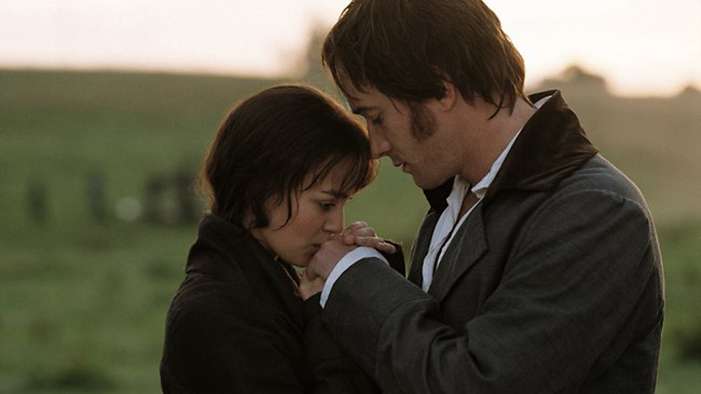
At first, Gatsby’s reunion with Daisy is terribly awkward. Gatsby knocks Nick’s clock over and tells Nick sorrowfully that the meeting was a mistake. After he leaves the two alone for half an hour, however, Nick returns to find them radiantly happy—Daisy shedding tears of joy and Gatsby glowing. Outside, the rain has stopped, and Gatsby invites Nick and Daisy over to his house, where he shows them his possessions. Daisy is overwhelmed by his luxurious lifestyle, and when he shows her his extensive collection of English shirts, she begins to cry. Gatsby tells Daisy about his long nights spent outside, staring at the green light at the end of her dock, dreaming about their future happiness.
Nick wonders whether Daisy can possibly live up to Gatsby’s vision of her. Gatsby seems to have idealized Daisy in his mind to the extent that the real Daisy, charming as she is, will almost certainly fail to live up to his expectations. For the moment, however, their romance seems fully rekindled. Gatsby calls in Klipspringer, a strange character who seems to live at Gatsby’s mansion, and has him play the piano. Klipspringer plays a popular song called “Ain’t We Got Fun?” Nick quickly realizes that Gatsby and Daisy have forgotten that he is there. Quietly, Nick gets up and leaves Gatsby and Daisy alone together.
Analysis
Chapter 5 is the pivotal chapter of The Great Gatsby, as Gatsby’s reunion with Daisy is the hinge on which the novel swings. Before this event, the story of their relationship exists only in prospect, as Gatsby moves toward a dream that no one else can discern. Afterward, the plot shifts its focus to the romance between Gatsby and Daisy, and the tensions in their relationship actualize themselves. After Gatsby’s history with Daisy is revealed, a meeting between the two becomes inevitable, and it is highly appropriate that the theme of the past’s significance to the future is evoked in this chapter. As the novel explores ideas of love, excess, and the American dream, it becomes clearer and clearer to the reader that Gatsby’s emotional frame is out of sync with the passage of time. His nervousness about the present and about how Daisy’s attitude toward him may have changed causes him to knock over Nick’s clock, symbolizing the clumsiness of his attempt to stop time and retrieve the past.
Gatsby’s character throughout his meeting with Daisy is at its purest and most revealing. The theatrical quality that he often projects falls away, and for once all of his responses seem genuine. He forgets to play the role of the Oxford-educated socialite and shows himself to be a love-struck, awkward young man. Daisy, too, is moved to sincerity when her emotions get the better of her. Before the meeting, Daisy displays her usual sardonic humor; when Nick invites her to tea and asks her not to bring Tom, she responds, “Who is ‘Tom’?” Yet, seeing Gatsby strips her of her glib veneer. When she goes to Gatsby’s house, she is overwhelmed by honest tears of joy at his success and sobs upon seeing his piles of expensive English shirts.
Read more about why Daisy cries over Gatsby's shirts.
One of the main qualities that Nick claims to possess, along with honesty, is tolerance. On one level, his arrangement of the meeting brings his practice of tolerance almost to the level of complicity—just as he tolerantly observes Tom’s merrymaking with Myrtle, so he facilitates the commencement of an extramarital affair for Daisy, potentially helping to wreck her marriage. Ironically, all the while Nick is disgusted by the moral decay that he witnesses among the rich in New York. However, Nick’s actions may be at least partially justified by the intense and sincere love that Gatsby and Daisy clearly feel for each other, a love that Nick perceives to be absent from Daisy’s relationship with Tom.
Read more about Nick’s conflicted tone as the novel’s narrator.
In this chapter, Gatsby’s house is compared several times to that of a feudal lord, and his imported clothes, antiques, and luxuries all display a nostalgia for the lifestyle of a British aristocrat. Though Nick and Daisy are amazed and dazzled by Gatsby’s splendid possessions, a number of things in Nick’s narrative suggest that something is not right about this transplantation of an aristocrat’s lifestyle into democratic America. For example, Nick notes that the brewer who built the house in which Gatsby now lives tried to pay the neighboring villagers to have their roofs thatched, to complement the style of the mansion. They refused, Nick says, because Americans are obstinately unwilling to play the role of peasants. Thomas Jefferson and the other founding fathers envisioned America as a place that would be free of the injustices of class and caste, a place where people from humble backgrounds would be free to try to improve themselves economically and socially. Chapter 5 suggests that this dream of improvement, carried to its logical conclusion, results in a superficial imitation of the old European social system that America left behind.
Read more about the theme of the decline of the American Dream in the 1920s.

Take the Chapter 5 Quick Quiz

The 7 Most Messed-Up Short Stories We All Had to Read in School