payment page




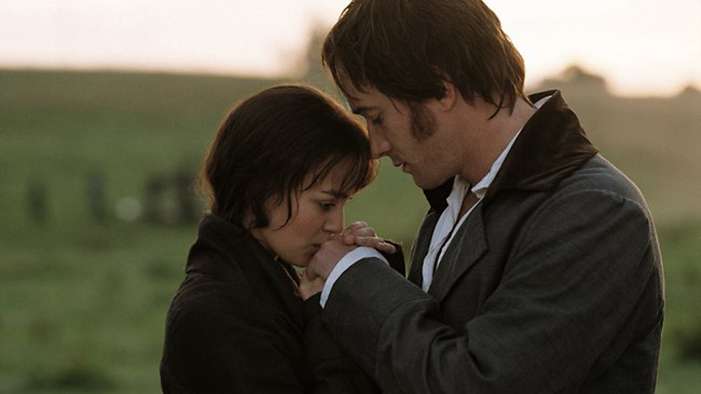
And as she looked at him she began to smile, for though she had not said a word, he knew, of course he knew, that she loved him.
See Important Quotations Explained
Summary: Chapter 18
Lily contemplates the evening’s disintegration once Mrs. Ramsay leaves. Some guests excuse themselves and scatter, while others remain at the table, watching Mrs. Ramsay go. The night, though over, will live on in each guest’s mind, and Mrs. Ramsay is flattered to think that she too will be remembered because she was a part of the party. She goes to the nursery and discovers, to her annoyance, that the children are still awake. James and Cam sit staring at a boar’s skull nailed to the wall. Cam is unable to sleep while it is there, and James refuses to allow it to be moved. Mrs. Ramsay covers it with her shawl, thus soothing both children. As Cam drifts off to sleep, James asks her if they will go to the lighthouse the next day. Mrs. Ramsay is forced to tell him no, and again, sure that he will never forget this disappointment, she feels a flash of anger toward Charles Tansley and Mr. Ramsay.
Downstairs, Prue, Minta, and Paul go to the beach to watch the waves coming in. Mrs. Ramsay wants to go with them, but she also feels an urge to stay, so she remains inside and joins her husband in the parlor.
Summary: Chapter 19
Mr. Ramsay sits reading a book by Sir Walter Scott. Mrs. Ramsay can tell by the controlled smile on his face that he does not wish to be disturbed, so she picks up her knitting and continues work on the stockings. She considers how insecure her husband is about his fame and worth. She is sure that he will always wonder what people think of him and his work. The poem that Mr. Ramsay and Augustus Carmichael recited during dinner returns to her. She reaches for a book of poetry. Briefly, her eyes meet her husband’s. The two do not speak, though some understanding passes between them. Mr. Ramsay muses on his idea that the course of human thought is a progression from
After reading one of Shakespeare’s sonnets, Mrs. Ramsay puts down her book and confides in her husband that Paul and Minta are engaged. Mr. Ramsay admits that he is not surprised by the news. His response leaves Mrs. Ramsay wanting more. Mr. Ramsay says that Mrs. Ramsay will not finish her stocking tonight, and she agrees. She is aware, by a sudden change of the look on his face, that he wants her to tell him that she loves him. She rarely says these words to him, and she now feels his desire to hear them. She walks to the window and looks out on the sea. She feels very beautiful and thinks that nothing on earth could match the happiness of this moment. She smiles and, though she does not say the words her husband wants to hear, she is sure that he knows. She tells him that he is right—that there will be no trip to the lighthouse the next day. He understands that these words mean that she loves him.
Analysis: The Window: Chapters 18 & 19
The harmony of the dinner party dissipates as Mr. and Mrs. Ramsay retire to the parlor to read, and the unity they feel earlier that evening disappears as they sit alone, two remote individuals reestablishing distance between them. Much of To the Lighthouse depends upon a rhythm that mimics the descriptions of the sea. Like a wave that rolls out and then back in again, the feeling of harmony comes and goes for the Ramsays. Their interaction in Chapter 19 is one of the most moving in the novel.
In her journal, Woolf wrote that she meant To the Lighthouse to be such a profoundly new kind of novel that a new name would need to be found to describe the form. She suggested the word “elegy,” meaning a sorrowful poem or song. There is a mournful quality to the work that gathers particular strength at the end of “The Window.” Although the Ramsays share an unparalleled moment of happiness, we are keenly aware of something equally profound that will forever go unspoken between them. Given the ultimate trajectory of the novel, elegy seems a fitting description. In the second part of the novel, the ravages of time, which Mrs. Ramsay has done her best to keep at bay, descend upon the story. In this section, the symbol of the boar’s skull hanging on the wall of the children’s nursery prefigures this inevitable movement toward death. The juxtaposition of youth and death is a particularly potent reminder that all things, given enough time, come to the same end.
Woolf further anticipates this inevitable life cycle and, more particularly, the death of Mrs. Ramsay through her use of literary allusions. Throughout the novel, Woolf refers to other works of literature to great effect. For instance, in the opening pages Mr. Ramsay blunders through a recitation of “The Charge of the Light Brigade,” which captures his anxieties about immortality, while at the dinner party the recently engaged Minta recalls Mr. Ramsay’s comments about Middlemarch, George Eliot’s novel about an unhappy marriage, whose story bears some resemblance to the trouble she later encounters with Paul. In this section, Mrs. Ramsay latches onto snatches of poetry that resonate with the larger concerns and structure of the novel. The lines from the Shakespeare sonnet that she reads, which describe the lingering presence of an absent loved one, foreshadow Mrs. Ramsay’s death and continuing influence over the living. The other poem, written by Charles Elton, is titled “Luriana Lurilee.” The lines that Mrs. Ramsay recites from this poem are doubly significant:
And all the lives we ever lived And all the lives to be, Are full of trees and changing leaves.
First, the “changing leaves” confirm the larger cyclical pattern of life and death. Second, the image of the tree links Mrs. Ramsay to Lily, who believes that the success of her painting rests in moving the tree to the middle of the canvas. This connection becomes particularly important, as the hope of achieving harmony in their world comes to rest on Lily’s shoulders.