






 Ad-free experience
 Study Guides for 1,000+ titles
 Full Text content for 250+ titles
 No Fear Translations of Shakespeare’s plays (along with audio!) and other classic works
 Flashcards
 Mastery Quizzes
 Infographics
 Graphic Novels
 AP® Practice & Lessons
 Note-taking
 Bookmarking
 Dashboard










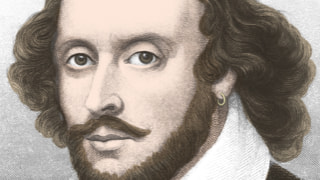
William Shakespeare (1564-1616)
The most influential writer in all of English literature, William Shakespeare was born in 1564 to a successful middle-class glove-maker in Stratford-upon-Avon, England. Shakespeare attended grammar school, but his formal education proceeded no further. In 1582 he married an older woman, Anne Hathaway, and had three children with her. Around 1590 he left his family behind and traveled to London to work as an actor and playwright. Public and critical success quickly followed, and Shakespeare eventually became the most popular playwright in England and part-owner of the Globe Theater. His career bridged the reigns of Elizabeth I (ruled 1558–1603) and James I (ruled 1603–1625), and he was a favorite of both monarchs. Indeed, James granted Shakespeare’s company the greatest possible compliment by bestowing upon its members the title of King’s Men. Wealthy and renowned, Shakespeare retired to Stratford and died in 1616 at the age of fifty-two. At the time of Shakespeare’s death, literary luminaries such as Ben Jonson hailed his works as timeless.
Shakespeare’s works were collected and printed in various editions in the century following his death, and by the early eighteenth century his reputation as the greatest poet ever to write in English was well established. The unprecedented admiration garnered by his works led to a fierce curiosity about Shakespeare’s life, but the dearth of biographical information has left many details of Shakespeare’s personal history shrouded in mystery. Some people have concluded from this fact that Shakespeare’s plays were really written by someone else—Francis Bacon and the Earl of Oxford are the two most popular candidates—but the support for this claim is highly circumstantial, and the theory is not taken seriously by many scholars.
In the absence of credible evidence to the contrary, Shakespeare must be viewed as the author of the thirty-seven plays and 154 sonnets that bear his name. The legacy of this body of work is immense. A number of Shakespeare’s plays seem to have transcended even the category of brilliance, becoming so influential as to profoundly affect the course of Western literature and culture ever after.
Background on A Midsummer Night's Dream
Written in the mid-1590s, probably shortly before Shakespeare turned to Romeo and Juliet, A Midsummer Night’s Dream is one of his strangest and most delightful creations, and it marks a departure from his earlier works and from others of the English Renaissance. The play demonstrates both the extent of Shakespeare’s learning and the expansiveness of his imagination. The range of references in the play is among its most extraordinary attributes: Shakespeare draws on sources as various as Greek mythology (Theseus, for instance, is loosely based on the Greek hero of the same name, and the play is peppered with references to Greek gods and goddesses); English country fairy lore (the character of Puck, or Robin Goodfellow, was a popular figure in sixteenth-century stories); and the theatrical practices of Shakespeare’s London (the craftsmen’s play refers to and parodies many conventions of English Renaissance theater, such as men playing the roles of women). Further, many of the characters are drawn from diverse texts: Titania comes from Ovid’s Metamorphoses, and Oberon may have been taken from the medieval romance Huan of Bordeaux, translated by Lord Berners in the mid-1530s. Unlike the plots of many of Shakespeare’s plays, however, the story in A Midsummer Night’s Dream seems not to have been drawn from any particular source but rather to be the original product of the playwright’s imagination.

Take the Context Quiz
Dive into our comprehensive guide to ace your Shakespeare assignments



