payment page




Summary: Act 1, Scene 2
Lady Anne, the widow of King Henry VI’s son, Edward, enters the royal castle with a group of men bearing the coffin of Henry VI. She curses Richard for having killed Henry. Both Henry VI and Edward, who were of the House of Lancaster, have recently been killed by members of the House of York, the family of the current king, Edward IV, and Richard. Anne says that Richard is to blame for both deaths. She refers spitefully to her husband’s killer as she mourns for the dead king and prince, praying that any child Richard might have be deformed and sick, and that he make any woman he might marry be as miserable as Anne herself is.
Suddenly, Richard himself enters the room. Anne reacts with horror and spite, but Richard orders the attendants to stop the procession so that he can speak with her. He addresses Anne gently, but she curses him as the murderer of her husband and father-in-law. Anne points to the bloody wounds on the corpse of the dead Henry VI, saying that they have started to bleed. (According to Renaissance tradition, the wounds of a murdered person begin to bleed again if the killer comes close to the corpse.)
Praising Anne’s gentleness and beauty, Richard begins to court her romantically. Anne naturally reacts with anger and horror and reminds Richard repeatedly that she knows he killed her husband and King Henry. He tells Anne that she ought to forgive him his crime out of Christian charity, then denies that he killed her husband at all. Anne remains angry, but her fierceness seems to dwindle gradually in the face of Richard’s eloquence and apparent sincerity. Finally, in a highly theatrical gesture, Richard kneels before her and hands her his sword, telling her to kill him if she will not forgive him, indicating that he doesn’t want to live if she hates him. Anne begins to stab toward his chest, but Richard keeps speaking, saying that he killed Henry IV and Edward out of passion for Anne herself—Anne’s beauty drove him to it. Anne lowers the sword.
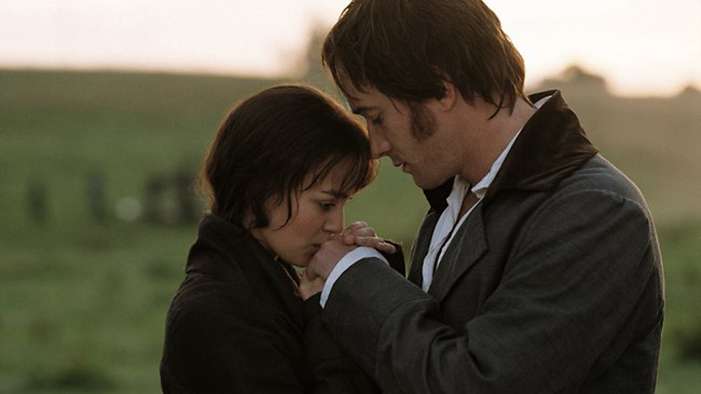
Richard slips his ring onto her finger, telling her that she can make him happy only by forgiving him and becoming his wife. Anne says that she may take the ring but that she will not give him her hand. Richard persists, and Anne agrees to meet him later at a place he names.
As soon as Richard is alone, he gleefully begins to celebrate his conquest of Anne. He asks scornfully whether she has already forgotten her husband, murdered by his (Richard’s) hand. He gloats over having won her even while her eyes were still filled with the tears of mourning, and over having manipulated her affections even though she hates him.
Read a translation of Act 1, Scene 2.
Analysis: Act 1, Scene 2
Act 1, Scene 2 is psychologically complicated, and is without doubt one of the most difficult scenes in the entire play. It is hard for many readers to accept that Anne, who mourns the dead Henry and curses Richard at the beginning of the scene, could possibly wear his ring and let him court her by the scene’s end. This scene demonstrates Richard’s brilliance as a manipulator of people. We receive a taste of this brilliance in Act I, scene i, but the wooing of Anne shows Richard’s persuasive abilities at a whole new level. Richard’s ability to persuade the grieving, bitter Anne to accept him as a suitor is surely proof of his ominous skill in playing upon people’s emotions and in convincing them that he is sincere when in fact he is lying through his teeth.
Read more about the theme of the allure of evil.
Richard manipulates Anne by feigning gentleness and persistently praising her beauty, a technique that he subtly twists later in the scene in order to play upon Anne’s sense of guilt and obligation. Richard implies that he killed Anne’s husband, Edward, because Anne’s beauty had caused Richard to love her—and that, therefore, Edward’s death is partially Anne’s fault. This tactic culminates in the highly manipulative, and risky, gesture of Richard’s offering her his sword and presenting his chest to her, saying she may kill him if she can. But, interrupted by Richard’s speeches, Anne finds herself unable to kill him. “Though I wish thy death, / I will not be thy executioner,” she says—just what Richard is counting on (I.i.
Read more about the power of language as a theme.
In a broad sense, this scene is a demonstration of Richard’s powerful way with words, which may be the most important aspect of his character. He wins Anne, a seemingly impossible feat. She herself, knowing that she cannot trust him, is nonetheless unable to resist his apparent sincerity and skillfully manipulative gestures. He engineers the entire scene to bring about the result he desires.
As the gleeful Richard says after Anne has left—in a gruesome spectacle of rejoicing that tends to reinforce the audience’s loathing of him, “[w]as ever woman in this humour wooed? / Was ever woman in this humour won?” (I.ii.