payment page




Summary
In the great hall of the Capulets, all is a-bustle. The servants work feverishly to make sure all runs smoothly, and they set aside some food to make sure they have some enjoyment of the feast as well. Capulet makes his rounds through groups of guests, joking with them and encouraging all to dance.
From across the room, Romeo sees Juliet and asks a serving-man who she is. The serving-man does not know. Romeo is transfixed; Rosaline vanishes from his mind and he declares that he has never been in love until this moment. Moving through the crowd, Tybalt hears and recognizes Romeo’s voice. Realizing that there is a Montague present, Tybalt sends a servant to fetch his rapier. Capulet overhears Tybalt and reprimands him, telling him that Romeo is well regarded in Verona, and that he will not have the youth harmed at his feast. Tybalt protests, but Capulet scolds him until he agrees to keep the peace. As Capulet moves on, Tybalt vows that he will not let this indignity pass.
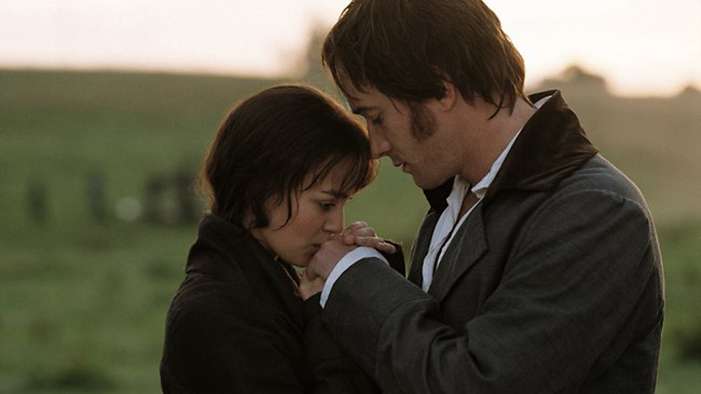
Meanwhile, Romeo has approached Juliet and touched her hand. In a dialogue laced with religious metaphors that figure Juliet as a saint and Romeo as a pilgrim who wishes to erase his sin, he tries to convince her to kiss him, since it is only through her kiss that he might be absolved. Juliet agrees to remain still as Romeo kisses her. Thus, in the terms of their conversation, she takes his sin from him. Juliet then makes the logical leap that if she has taken Romeo’s sin from him, his sin must now reside in her lips, and so they must kiss again.
Just as their second kiss ends, the Nurse arrives and tells Juliet that her mother wants to speak with her. Romeo asks the Nurse who Juliet’s mother is. The Nurse replies that Lady Capulet is her mother. Romeo is devastated. As the crowd begins to disperse, Benvolio shows up and leads Romeo from the feast. Juliet is just as struck with the mysterious man she has kissed as Romeo is with her. She comments to herself that if he is already married, she feels she will die (1.5.131). In order to find out Romeo’s identity without raising any suspicions, she asks the Nurse to identify a series of young men. The Nurse goes off and returns with the news that the man’s name is Romeo, and that he is a Montague. Overcome with anguish that she loves a Montague, Juliet follows her nurse from the hall.
Read a translation of Act 1, scene 5
Analysis
This is the moment we’ve all been waiting for. Romeo sees Juliet and forgets Rosaline entirely; Juliet meets Romeo and falls just as deeply in love. The meeting of Romeo and Juliet dominates the scene, and, with extraordinary language that captures both the excitement and wonder that the two protagonists feel, Shakespeare proves equal to the expectations he has set up by delaying the meeting for an entire act.
Read more about the protagonists.
The first conversation between Romeo and Juliet is an extended Christian metaphor. Using this metaphor, Romeo ingeniously manages to convince Juliet to let him kiss her. But the metaphor holds many further functions. The religious overtones of the conversation clearly imply that their love can be described only through the vocabulary of religion, that pure association with God. In this way, their love becomes associated with the purity and passion of the divine. But there is another side to this association of personal love and religion. In using religious language to describe their burgeoning feelings for each other, Romeo and Juliet tiptoe on the edge of blasphemy. Romeo compares Juliet to an image of a saint that should be revered, a role that Juliet is willing to play. Whereas the Catholic church held that reverence for saint’s images was acceptable, the Anglican church of Elizabethan times saw it as blasphemy, a kind of idol worship. Romeo’s statements about Juliet border on the heretical. Juliet commits an even more profound blasphemy in the next scene when she calls Romeo the “god of her idolatry,” effectively installing Romeo in God’s place in her personal religion (2.1.156). We have discussed already how Romeo and Juliet’s love seems always to be opposed by the social structures of family, honor, and the civil desire for order. Here it is also shown to have some conflict, at least theologically, with religion.
Read more about metaphors and similes in the play.
When Romeo and Juliet meet they speak just fourteen lines before their first kiss. These fourteen lines make up a shared sonnet, with a rhyme scheme of ababcdcdefefgg. A sonnet is a perfect, idealized poetic form often used to write about love. Encapsulating the moment of origin of Romeo and Juliet’s love within a sonnet, therefore, creates a perfect match between literary content and formal style. The use of the sonnet, however, also serves a second, darker purpose. The play’s Prologue also is a single sonnet of the same rhyme scheme as Romeo and Juliet’s shared sonnet. If you remember, the Prologue sonnet introduces the play, and, through its description of Romeo and Juliet’s eventual death, also helps to create the sense of fate that permeates
Read more about the sonnets in the play.
That fate begins to assert itself in the instant when Romeo and Juliet first meet: Tybalt recognizes Romeo’s voice when Romeo first exclaims at Juliet’s beauty. Capulet, acting cautiously, stops Tybalt from taking immediate action, but Tybalt’s rage is set, creating the circumstances that will eventually banish Romeo from Verona. In the meeting between Romeo and Juliet lie the seeds of their shared tragedy.
Read more about the inevitability of fate as a theme.
The first conversation between Romeo and Juliet also provides a glimpse of the roles that each will play in their relationship. In this scene, Romeo is clearly the aggressor. He uses all the skill at his disposal to win over a struck, but timid, Juliet. Note that Juliet does not move during their first kiss; she simply lets Romeo kiss her. She is still a young girl, and though already in her dialogue with Romeo has proved herself intelligent, she is not ready to throw herself into action. But Juliet is the aggressor in the second kiss. It is
Juliet’s subsequent comment to Romeo, “You kiss by th’ book,” can be taken in two ways (1.5.107). First, it can be seen as emphasizing Juliet’s lack of experience. Many productions of
Read more about what the tone of the play suggests about sexual desire.

Take the Act 1, scene 5 Quick Quiz

Read a translation of Act 1, scene 5