payment page




Summary: Chapter 57
After Magwitch's death, Pip falls into a feverish illness. He is also arrested for debt and nearly carted away to prison; he is spared only because of his extreme ill health. He experiences wild hallucinations, reliving scenes with Orlick and Miss Havisham and continually seeing Joe’s face. But the last is not a hallucination: Joe really has come, and he nurses Pip through his illness.
As Pip recovers, Joe tells him the news from home: Miss Havisham has died, wisely distributing her fortune among the Pockets. After failing to kill Pip, Orlick robbed Pumblechook, and he since has been caught and put in jail. And Joe has news about himself: Biddy has helped him learn how to read and write.
Pip and Joe go on a Sunday outing, just as they used to do when Pip was a boy. But when Pip tries to tell Joe the story of Magwitch, Joe refuses to listen, not wanting to revisit painful memories. Despite Pip’s renewed affection, living in London makes Joe increasingly unhappy, and one morning Pip finds him gone. Before leaving, he does Pip one last good turn, paying off all of Pip’s debts. Pip rushes home to reconcile with Joe and decides to marry Biddy when he gets there.
Summary: Chapter 58
When Pip arrives at his childhood home, he finds Satis House pulled apart in preparation for an auction. Pumblechook tracks him down at his hotel and treats him condescendingly, but Pip rudely takes his leave and goes to find Biddy and Joe. Biddy’s schoolhouse is empty, as is Joe’s smithy. When Pip finds them, he is shocked to discover that they have been married. Despite his disappointed expectation of marriage to Biddy, he expresses happiness for them and decides to take the job with Herbert.
Summary: Chapter 59
Eleven years later, Pip returns to England. He says he has learned to work hard and is content with the modest living he makes in the mercantile firm. He goes to visit Joe and Biddy, and tries to convince Biddy that he has resigned himself to being a bachelor.
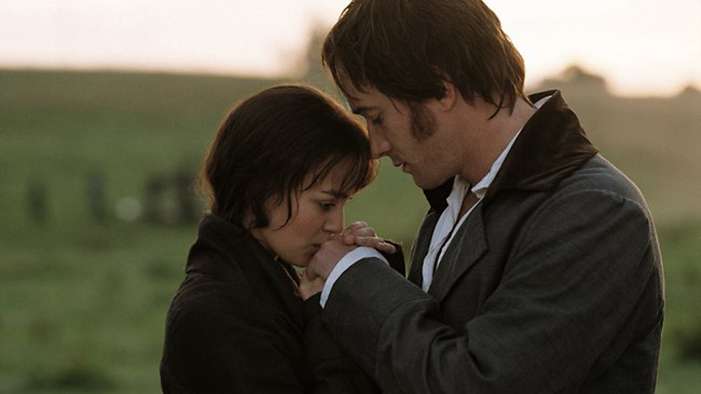
Pip then goes to Satis House and finds that it is no longer standing. In a silvery mist, Pip walks through the overgrown, ruined garden and thinks of Estella. He has heard that she was unhappy with Drummle but that Drummle has recently died. As the moon rises, Pip finds Estella wandering through the old garden. They discuss the past fondly; as the mists rise, they leave the garden hand in hand, Pip believes, never to part again.
Analysis: Chapters 57–59
The ending of Great Expectations is more controversial than it may seem at first. Before writing the scene in which Pip finds Estella in the garden and sees “no shadow of another parting from her,” Dickens wrote another, less romantic ending to the book. In this version, Pip hears that, after Drummle’s death, Estella married a country doctor in Shropshire. Walking through London one day with Joe and Biddy’s son, Pip runs into Estella and they have a very brief meeting and shake hands. Though they do not discuss the past, Pip says he could see that “suffering had been stronger than Miss Havisham’s teaching and had given her a heart to understand what my heart used to be.”
Read more about how Pip and Estella change.
Dickens changed this ending at the suggestion of a friend, the novelist Edward Bulwer Lytton. He seems to have been motivated, at least in part, by the desire to please his reading public with a happy ending. Some critics have felt that the original ending of Great Expectations is more true to the tone of the novel, that the process of Pip’s redemption as a character is exactly the process that would make his continued love for Estella impossible. Others have felt that the original ending is too harsh, that their common past has destined Pip and Estella for one another, and that the main story of the novel is the story of their mutual development toward the conditions in which their love can be realized.
Read more about Satis House as a symbol.
There is no clear historical reason to favor one of these endings over the other. Dickens stuck with the final version through every subsequent edition of the novel, but the original ending, changed only through outside influence, was Dickens’s first sense of how the story ought to end. Though the romantic ending remains the “official” ending of the book, each reader of Great Expectations may interpret the novel for him- or herself and decide which ending best fits his or her own understanding of the story.
Read more about the multiple endings of Great Expectations.
In any case, Pip’s fundamental development by this final section remains clear, and it is emphasized in his reconciliation with Joe and Biddy in Chapters

Take the Chapters 57-59 Quick Quiz

The 7 Most Messed-Up Short Stories We All Had to Read in School