payment page




Summary: Act III, scene i
Claudius and Gertrude discuss Hamlet’s behavior with Rosencrantz and Guildenstern, who say they have been unable to learn the cause of his melancholy. They tell the king and queen about Hamlet’s enthusiasm for the players. Encouraged, Gertrude and Claudius agree that they will see the play that evening. Rosencrantz and Guildenstern leave, and Claudius orders Gertrude to leave as well, saying that he and Polonius intend to spy on Hamlet’s confrontation with Ophelia. Gertrude exits, and Polonius directs Ophelia to walk around the lobby. Polonius hears Hamlet coming, and he and the king hide.
Hamlet enters, speaking thoughtfully and agonizingly to himself about the question of whether to commit suicide to end the pain of experience: “To be, or not to be: that is the question” (III.i.58). He says that the miseries of life are such that no one would willingly bear them, except that they are afraid of “something after death” (III.i.80). Because we do not know what to expect in the afterlife, we would rather “bear those ills we have,” Hamlet says, “than fly to others that we know not of” (III.i.83–84). In mid-thought, Hamlet sees Ophelia approaching. Having received her orders from Polonius, she tells him that she wishes to return the tokens of love he has given her.
Angrily, Hamlet denies having given her anything; he laments the dishonesty of beauty, and claims both to have loved Ophelia once and never to have loved her at all. Bitterly commenting on the wretchedness of humankind, he urges Ophelia to enter a nunnery rather than become a “breeder of sinners” (III.i.122–123). He criticizes women for making men behave like monsters and for contributing to the world’s dishonesty by painting their faces to appear more beautiful than they are. Working himself into a rage, Hamlet denounces Ophelia, women, and humankind in general, saying that he wishes to end all marriages. As he storms out, Ophelia mourns the “noble mind” that has now lapsed into apparent madness (III.i.149).
The king and Polonius emerge from behind the tapestry. Claudius says that Hamlet’s strange behavior has clearly not been caused by love for Ophelia and that his speech does not seem like the speech of insanity. He says that he fears that melancholy sits on something dangerous in Hamlet’s soul like a bird sits on her egg, and that he fears what will happen when it hatches. He declares that he will send Hamlet to England, in the hope that a change of scenery might help him get over his troubles. Polonius agrees that this is a good idea, but he still believes that Hamlet’s agitation comes from loving Ophelia. He asks Claudius to send Hamlet to Gertrude’s chamber after the play, where Polonius can hide again and watch unseen; he hopes to learn whether Hamlet is really mad with love. Claudius agrees, saying that “[m]adness in great ones” must be carefully watched (III.i.187).
Read a translation of Act III, scene i
Analysis
“To be, or not to be” is the most famous line in English literature. What does it mean? Why are these words and what follows special?
One reason is that they are a stunning example of Shakespeare’s ability to make his characters seem three-dimensional. The audience senses that there is more to Hamlet’s words than meets the ear—that there is something behind his words that is never spoken. Or, to put it another way, the audience witnesses signs of something within Hamlet’s mind that even he isn’t aware of. Hamlet is a fictional character who seems to possess a subconscious mind. How does Shakespeare manage to accomplish this?
In the first place, Hamlet doesn’t talk directly about what he’s really talking about. When he questions whether it is better “to be, or not to be,” the obvious implication is, “Should I kill myself?” The entire soliloquy strongly suggests that he is toying with suicide and perhaps trying to work up his courage to do it. But at no point does he say that he is in pain or discuss why he wants to kill himself. In fact, he never says “I” or “me” in the entire speech. He’s not trying to “express” himself at all; instead, he poses the question as a matter of philosophical debate.
Read more about doubt as a theme.
When he claims that everybody would commit suicide if they weren’t uncertain about the afterlife, it sounds as if he’s making an argument to convince an imaginary listener about an abstract point rather than directly addressing how the question applies to him. Now, it’s perfectly ordinary for characters in plays to say something other than what they mean to other characters (this suggests that they are consciously hiding their true motives), but Hamlet does it when he’s talking to himself. This creates the general impression that there are things going on in Hamlet’s mind that he can’t think about directly.
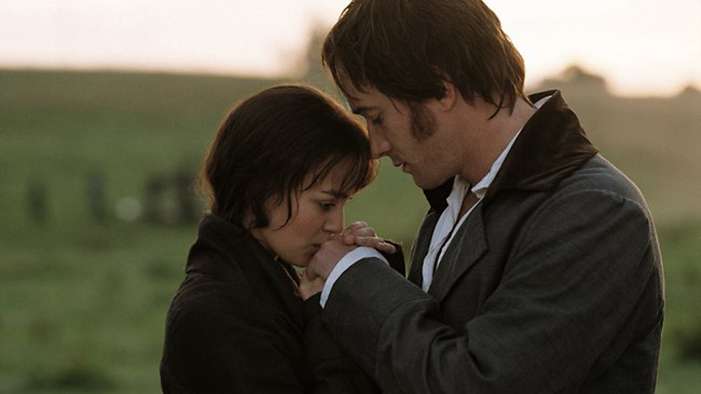
While we’re on the subject of what’s going on inside Hamlet’s mind, consider his encounter with Ophelia. This conversation, closely watched by Claudius and Polonius, is, in fact, a test. It’s supposed to establish whether Hamlet’s madness stems from his lovesickness over Ophelia. Before we, the audience, see this encounter, we already think we know more than Claudius does: we know that Hamlet is only acting crazy, and that he’s doing it to hide the fact that he’s plotting against (or at least investigating) his uncle. Therefore, it can’t be true that he’s acting mad because of his love for Ophelia. But witnessing Hamlet’s encounter with her throws everything we think we know into question.
Read more about whether Hamlet is really mad.
Does Hamlet mean what he says to Ophelia? He says that he did love her once but that he doesn’t love her now. There are several problems with concluding that Hamlet says the opposite of what he means in order to appear crazy. For one thing, if he really does love her, this is unnecessarily self-destructive behavior. It’s unnecessary because it doesn’t accomplish very much; that is, it doesn’t make Claudius suspect him less. His professions of former love make him appear fickle, or emotionally withdrawn, rather than crazy.
Is Hamlet really crazy or just pretending? He announced ahead of time that he was going to act crazy, so it’s hard to conclude that he (coincidentally) really went mad right after saying so. But his behavior toward Ophelia is both self-destructive and fraught with emotional intensity. It doesn’t obviously further his plans. Moreover, his bitterness against Ophelia, and against women in general, resonates with his general discontentedness about the state of the world, the same discontentedness that he expresses when he thinks no one is watching. There is a passionate intensity to his unstable behavior that keeps us from viewing it as fake.
Read more about misogyny as a motif.
Perhaps it is worthwhile to ask this question: if a person in a rational state of mind decides to act as if he is crazy, to abuse the people around him regardless of whether he loves those people or hates them, and to give free expression to all of his most antisocial thoughts, when he starts to carry those actions out, will it even be possible to say at what point he stops pretending to be crazy and starts actually being crazy?

Take the Act III, scene i Quick Quiz

Read a translation of Act III, scene i